
Wednesday, June 30, 2021

Sunday, August 16, 2020
Great Artists Steal -What was DaVinci's secret?
Mariano di Jacopo also known as Taccola - Wikipedia could hold the most important secret in the life of Leonardo DaVinci. Unlike the secret societies and hidden religious mysteries in the DaVinci Code, the real secret from DaVinci was his predecessor. This lesser known influence is now fairly well documented although still not even mentioned in many discussions of DaVinci’s life. So while DaVinci defined the quintessential role of genius for the West, as is often the case in discovery, Taccola provided the shoulders that DaVinci was able to stand on. This suggests that many of DaVinci’s greatest contributions were not necessarily originating new ideas but refining and polishing them thus pointing us again to the lesson that scientific advances do not occur in isolation. Below Taccola’s earlier design of a paddle propelled boat.
What may be even an even more interesting twist is Taccola’s own potential source of influence: the Chinese. Although it has not yet been well established there is the tantalizing possibility that Taccola and hence DaVinci were influenced by a Chinese manuscript. There are still plenty of lingering questions and alternatives on this connection and but it remains a possibility. Unfortunately this possibility has already blown way out of proportion by Gavin Menzies claiming it was brought by an entire Chinese fleet around this time, however it remains possible that drawings had in fact been brought by the likes of Chinese traders, Marco Polo or other traders and ended up in the hands of Taccola and DaVinci. The implications to Western history would be huge including a revised narrative re-emphasizing the role of cooperation across diverse cultures. Thus, the most important and potentially controversial secret from DaVinci was not about religion or any secret societies beyond the role they played in early global exchange.
Were these the source of DaVinci’s ideas or did they occur independently?
https://www.quora.com/What-secret-behind-the-Leonardo-davinci
Tuesday, April 10, 2018
Teaching Character in Science Class
I recently read The Leader in Me which is basically the application of Covey's 7 Habits to elementary schools. Rather than giving specifics of how to implement the principles, the book tells a few stories of how Leadership principles successfully transformed schools. This leaves open a lot freedom for figuring out how. While there are plenty of examples given for English and History, Science seems like a bit more of a challenge so here are some ideas I've come up with.
For a Life Science class specifically, in the Ecology unit there is a classic breakdown of feeding relationships in living organisms which is a great opportunity to talk about win/win. Feeding relationships in living organisms are traditionally divided into the categories of commensalism, mutualism, predation and parasitism. Of these mutualism is basically the same idea as habit 4 think win-win and the other categories can also serve to show contrasting examples. Some other examples of organisms with a mutualistic or symbiotic, win-win type relationship are bacteria in the human gut, Ostriches and gazelles feeding together, Oxpecker with Rhinoceros, wrasse fish with black sea bass, yucca plant with yucca moth, Clown fish with Sea anemone and many many more including other pollinators. What I really like about learning the ecology relationships along with habit 4 win-win is that as students deepen their understanding mutualistic relationships they can also deepen their understanding of win-win in their personal life thus reinforcing both.
 In the introduction to the 7 Habits Covey explains the power of a habit in our personal lives. One of the best places ways to illustrate the power of habit in Newtons first law of inertia. Covey uses the example of a rocket taking off overcoming the pull of gravity to show the principle but any application of the law of inertia can really illustrate the same idea. Good habits gain their own inertia once that have overcome the static friction of gravity while bad habits tend to resist change. Another similar example is a car cranking to start the most challenging parts are the first few rotations.
The book also helped me realize I don't need to re-invent the fundamentals of character/moral/ethical ideas for students in my class but openly talk about the 7 habits principles and encourage students to find examples in their own lives and in the subjects we study.
Although I felt empowered to
use the 7 habit language more freely in my classroom the book also reminded me that real change in a school needs to involve administration. On that note, it is unfortunate that the Covey organization demands so much money for their training which also highlights for me how some of their corporate tendencies are not always totally compatible with academic pursuits. I think for most schools a compromise of either training and reading the book and figuring out how to apply the principles themselves works well enough although it would be nice to see more involvement from the Covey Organization directly in university teacher training. With direct teacher training new teachers wouldn't have as much disconnect between what they've already learned and something as effective as the 7 Habits.
Necessary sequences and order and the cell cycle, developmental stages, stages of a virus.
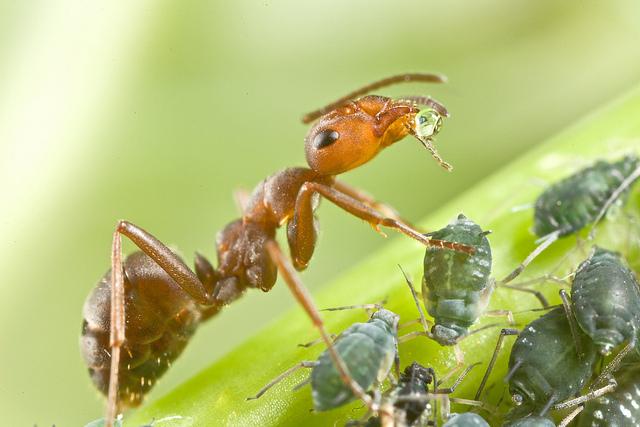 |
| Mutualism Teaches Habit 4: Think Win-Win. Ants and aphids both benefit from their interaction. |

 |
As static friction opposes the movement of an object
so new habits are hard to get started
|
use the 7 habit language more freely in my classroom the book also reminded me that real change in a school needs to involve administration. On that note, it is unfortunate that the Covey organization demands so much money for their training which also highlights for me how some of their corporate tendencies are not always totally compatible with academic pursuits. I think for most schools a compromise of either training and reading the book and figuring out how to apply the principles themselves works well enough although it would be nice to see more involvement from the Covey Organization directly in university teacher training. With direct teacher training new teachers wouldn't have as much disconnect between what they've already learned and something as effective as the 7 Habits.
Necessary sequences and order and the cell cycle, developmental stages, stages of a virus.
Thursday, March 8, 2018
4 Insights From the Father of Artificial Intelligence- Herbert Simon
1. One idea can lead to so many fields.
First off, I'm surprised his autobiography was not titled Mazes of my Life because the recurring theme is mazes and their meaning in decision making. Overall his account has some real gems but is so filled with boring acronym laden academic politics that could have been left out. If the reader is willing to sift through that, Simon gives clear minded first hand accounts of the life as a hard working ultra rational political genius who grappled academically with the cultural upheavals of world war II, Cold War and founding of a business school. He pursued human decision making questions through revolutionary realms in Economics, Psychology and pioneering early computers into 'artificial intelligence.' What initially interested me in his biography was my constant lookout for a renaissance man type interdisciplinary thinker and even more a modern successful one. What kept me going was his honesty and how he reminded me of certain family members of mine.
2. A Father in Feedback Systems
Simon gives a forthright telling of his life events with the objectivity that helped make his thinking so logical. In his own words his youth did not show signs of anything particularly original which is a good reminder for parents who over or under stress their own children's talents. Although he did say he skipped grades and wrote an atheist letter which caused some controversy. His father was a leading engineer who exposed Herbert to industry and did new research in servo feedback designs although Herbert did not appreciate this until much later.
3. He knew 20 languages?
Mr. Simon claimed to know 6 languages well and that he could read up to 20. He definitely had a powerful brain and his work showed that, although he was also a self described workaholic. He successfully took on speaking assignments to large groups of local government leaders early in his 20's assigned by mentors. His career made as near seamless transition from academic graduate studies to a career in managing government as his professors recognized his abilities. One nugget is his list of advice given to a working professor. (add quote) His own experience teaching a wide variety of classes gave me a more realistic picture into the life of a professional university academic. The biggest critique on his dissertation and later in social and personal life were his lack of moral consideration and empathy which he disappointingly never quite seemed to fully grasp.
4. Its who you know even for Nobel Prizes
Mr. Simon's redeeming trait was his honesty which he exemplified in admitting had he not known the right people he likely would not have been given a Nobel prize. Similarly he recognizes collaboration was extremely important to his AI breakthroughs as he recruited a research team and gave them a location to work. If I understand it correctly his main thesis in economics was that surrounding forces influence people's decisions (what he called bounded rationality) more than their desire and ability to optimize happiness as 'neoclassical economists' believe. (I am grossly simplifying here). Although this is likely partially true I can see why it was unpopular as it is a lot easier and more natural to think of people making their own decisions to pursue their own happiness.
5. Discovering Artificial Intelligence was to prove someone wrong
The section of his book on conflict with other scientists shows that another major reason that he made his discoveries were to disprove those who said machines can't think or do things like solve geometry problems. This highlights one of the other most valuable insights of this book, his first hand perspectives on how science really happens. Discoveries come in brilliant brief moments of joy when a team is pulling together after long hours of following hunches and developing a taste for finding valuable research. They do not easily fit into neat categories requiring controlled variables. For Simon it was writing the program that helped bridge the gap between computing and thinking using symbols. Although his mind and training were tickets to the game it was in the end Simon's political abilities to recognize valuable problems and bring people together that allowed him to make a lasting contribution to human achievement.
First off, I'm surprised his autobiography was not titled Mazes of my Life because the recurring theme is mazes and their meaning in decision making. Overall his account has some real gems but is so filled with boring acronym laden academic politics that could have been left out. If the reader is willing to sift through that, Simon gives clear minded first hand accounts of the life as a hard working ultra rational political genius who grappled academically with the cultural upheavals of world war II, Cold War and founding of a business school. He pursued human decision making questions through revolutionary realms in Economics, Psychology and pioneering early computers into 'artificial intelligence.' What initially interested me in his biography was my constant lookout for a renaissance man type interdisciplinary thinker and even more a modern successful one. What kept me going was his honesty and how he reminded me of certain family members of mine.
 |
| image from saxonianfolkways.wordpress.com |
Simon gives a forthright telling of his life events with the objectivity that helped make his thinking so logical. In his own words his youth did not show signs of anything particularly original which is a good reminder for parents who over or under stress their own children's talents. Although he did say he skipped grades and wrote an atheist letter which caused some controversy. His father was a leading engineer who exposed Herbert to industry and did new research in servo feedback designs although Herbert did not appreciate this until much later.
3. He knew 20 languages?
Mr. Simon claimed to know 6 languages well and that he could read up to 20. He definitely had a powerful brain and his work showed that, although he was also a self described workaholic. He successfully took on speaking assignments to large groups of local government leaders early in his 20's assigned by mentors. His career made as near seamless transition from academic graduate studies to a career in managing government as his professors recognized his abilities. One nugget is his list of advice given to a working professor. (add quote) His own experience teaching a wide variety of classes gave me a more realistic picture into the life of a professional university academic. The biggest critique on his dissertation and later in social and personal life were his lack of moral consideration and empathy which he disappointingly never quite seemed to fully grasp.
4. Its who you know even for Nobel Prizes
 |
JOHNNIAC photo by Adam Schuster |
5. Discovering Artificial Intelligence was to prove someone wrong
The section of his book on conflict with other scientists shows that another major reason that he made his discoveries were to disprove those who said machines can't think or do things like solve geometry problems. This highlights one of the other most valuable insights of this book, his first hand perspectives on how science really happens. Discoveries come in brilliant brief moments of joy when a team is pulling together after long hours of following hunches and developing a taste for finding valuable research. They do not easily fit into neat categories requiring controlled variables. For Simon it was writing the program that helped bridge the gap between computing and thinking using symbols. Although his mind and training were tickets to the game it was in the end Simon's political abilities to recognize valuable problems and bring people together that allowed him to make a lasting contribution to human achievement.
Monday, January 15, 2018
Pre-historic Yosemite

Monday, December 18, 2017
3 Industry Impacts of SpaceX- Rocking the Rocket Industry
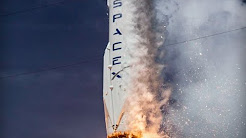
SpaceX has disrupted the rocket launch industry and we all stand to benefit, but will Elon Musk take us to Mars or 'burn out his fuse alone' in the words of Elton John.
Summary:
Summary:
Elon Musk's SpaceX has changed the rocket launch industry by introducing free market ideas to an industry previously dominated by Government and entrenched contractors.
SpaceX's disruptive innovation has brought down the cost and improved efficiency of rocket launches undercutting other major industry players like Boeing and Lockheed's ULA and Orbital ATK.
The Rocket launch industry is responding and Jeff Bezos's Blue Origin likely presents the most lean sustainable option besides SpaceX at current valuation
Jeff Bezos and Blue Origin have responded and may present an even leaner yet more sustainable model than SpaceX
1 Applying the Free Market to the Space Race (intro and background)
Rather than going to another state to see an eclipse, in 20 years you might be checking it out from the moon. Unfortunately since the time of the Space Race between, the whole space enterprise has been only affordable to world powers. Since the time of the USSR, interest in going to space only declined as did the amount of capital and thought put into it until in recent decades, Space, the final frontier, re-emerged as the ultimate prize. But this time instead of countries, the competitors are tech billionaires. So as today’s moguls fight for top positions in technology, rockets have also become a source of competition to the titans of industry but we all stands to profit.
The two leading players you've probably heard of Elon Musk of Tesla, backing SpaceX and Jeff Bezos Amazon founder, backing Blue Origin. They're are both interested in sending you to the moon. In addition to Musk and Bezos there is now an ecosystem of startups forming around the increasing interest and demand for space capabilities. Recently Paul Allen of Microsoft has showed interest in launching rockets and Virgin Galactic continues promising customers a zero G experience. Along with an increasing demand for satellites, SpaceX's influence has already opened up a new market that other startups are pursuing. As tech crunch puts it, “SpaceX and Blue Origin are nearly engaged in a new space race albeit one without dire consequences. The two American companies are racing towards similar goals of sustainable space flight through the reuse of rockets that can be landed... Now both companies are reportedly aiming for the moon. This isn’t a zero-sum game; humanity wins if both companies win.”
Disrupting the Rocket Launch Industry
SpaceX’s pioneering efforts has been disruptive innovation to a long dormant industry. As Clayton Christensen originally described disruptive innovation, its “a process by which a product or service takes root initially in simple applications at the bottom of a market and then relentlessly moves up market, displacing established competitors.” Following this process SpaceX is displacing large entrenched government contractors like United Launch Alliance and its owners, Boeing and Lockheed as well as Orbital ATK. SpaceX's launch attempts have been more lean, building with discarded launch equipment. They have been better able to harness the creative, cost sensitive free market to push the rocket development, making them more efficient and flexible than any prior attempts. This has opened up new approaches to the process like landing reusable rockets, reusable space planes, sub-orbital flights, motor-like rockets and electric propulsion.
Other major industry players tend to follow government contract mentality and are also mainly involved in weapons systems, like Orbital ATK formed from the merger of Orbital Sciences Corp. and the Aerospace and Defense groups of Alliant Techsystems Inc. (ATK) and United Launch Alliance (ULA) forming as a joint venture of Lockheed and Boeing. SpaceX is uniquely focused on rockets for transportation, "doing it all themselves, where Orbital tends to either contract for a subsystem or acquire an existing aerospace company." SpaceX builds their own liquid boosters with their own engines while the big aerospace companies buy Russian engines getting them into political trouble. Orbital ATK and ULA are consequently getting less lucrative launch contracts and have been forced to cut costs and produce better rockets capable of competing with SpaceX.
2 Igniting competition with Jeff Bezos
Although they might be the first billionaires vying for space, I find insightful to remember that Elon Musk and Jeff Bezos are only picking up the North-South rivalry started by Steve Jobs and Bill Gates pushing the bounds of technology.
It follows that Bezos like Gates tends to be less creative more business-oriented, methodical and plodding in his progress not making dramatic leaps into the future. He builds more slowly, progressively unlike their Southern rivals, step by step dutifully taking advantage of emerging technology. Bezos, like Gates, tends to apply sound management rather than pursue technology for its own sake. Financially, Bezos is more conservative, using his resources to build his financial base of Amazon. Shortly after recently becoming 2nd richest person in the world he promptly sold off $1 Billion worth of shares which is a much smaller portion of his wealth than Elon Musk has staked on SpaceX and thus will be able to support Blue Origin on the side long into the future.
Risks
To deepen the comparison, both Gates and Bezos have more orderly personal lives having remained with the same women compared to the more dramatic personal lives of Jobs and Musk. Although no one could've predicted Job's untimely death, Musk's profligate stream of love interests and other enterprises does not bode well for continued focus on SpaceX. Musk, like Jobs is a more impassioned visionary. They are both driven by their dreams occasionally to extremes and taking more risky, creative and expensive leaps into the future. They both combine exciting sexy ideas into highly functional products pushing the outer boundaries of what is possible making things functional yet beautiful.
Musk has committed more of his wealth, time and resources, to the future space and space transportation. This has resulted in tremendous breakthroughs like the vertical landing but also more catastrophic failures like the Falcon 9 exploding near takeoff. Musk is the more creative genius pushing towards the lofty prospect of a brighter future for humanity. In pursuing so determinedly his dream Musk has centered himself at the heart of pioneering the disruptive technology that Bezos and other space companies are either forced to compete with or benefit from.
Conclusion *For a full explanation of how I would invest see the rest of the article
My takeaway is that although Musk and SpaceX are making the most breathtaking breakthroughs, their lasting impacts will end up being the legacy of disruptive ideas left behind. Betting on which company will end up being more profitable and sustainable, I would expect more likely to be riding a Blue Origin brand rocket into the future rather than one made by SpaceX.* The current general market attitude towards technology and space seem to harken back the the optimistic bravado seen during roaring 20’s of last century. When in the US thought all our lives would be forever improved because of technology. Although I watch in awe at what is being achieved, when the market turns less optimistic I would hope that companies like SpaceX and Blue Origin will still be around to pick put together the pieces as they did with the leftovers from the Space race of last century.

*For a full explanation of how I would invest see the rest of the article wrote for Seeking Alpha.
Major prize surprisingly goes to blue origin over space x.
Major prize surprisingly goes to blue origin over space x.
https://www.fool.com/investing/2016/07/04/eat-your-heart-out-spacex-blue-origin-takes-the-pr.aspx
http://www.dailymail.co.uk/sciencetech/article-3808605/Billionaire-space-battle-takes-Twitter-Jeff-Bezos-takes-aim-Elon-Musk-tweeting-images-model-megarocket-just-hours-SpaceX-founder-showed-Mars-rocket-engine.html
Monday, August 14, 2017
The 7 Habits of Highly Effective Teachers
 From The First Days of School, the so-called Bible of teaching. This is a fundamental reference for almost any teacher also good for anyone with kids to be familiar with. Reading it, I really appreciated that it’s encouraging yet real and applicable yet motivating. These are my top 7 takeaways from the book:
1. Preparation. Preparation, Preparation. Being a good (or effective) teacher is more about classroom prep; planning clear underlying procedures than it is about being good at explaining subject matter. If you fail to prepare you prepare to fail. Leadership requires planning. Teachers who don’t think through class procedures at the beginning of the year will spend the rest of the year chasing students. The first few days should be spent on rehearsing this ‘how’ of class functioning before getting into materials. See Chapters 11-17.
 |
| Assignments should be easily understood by students and parents |
2 Beg, Borrow and Steal! Teachers’ most valuable resource are successful fellow teachers, and the best resource for students are successful fellow students. Studies show that the main distinguishing factor in successful schools is whether teachers actively collaborate and work together. See Chapters. 3,4 and 24.
3 Teacher Attitude and reputation will affect their class, no matter how they might try and hide it. “Right or wrong, accurate or not, your reputation will precede you.” Teachers must genuinely believe all students can succeed because their attitude will consciously or unconsciously affect how they treat students. How teachers dress and act in their class positive or negative will be talked about by students, parents and administration and decisions will be based on that reputation. Students will reflect a teachers’ attitude. Section B Positive Expectations
4 Rules have consequences and rewards. As opposed to procedures, in a classroom there should only be 3-5 clear rules with clear consistent consequences agreed upon by teacher, parents and students. Choices and taking responsibility for the results of those choices is the most important theme in this book. Teachers should respond to questions of misbehavior reminding students they CHOSE their actions and the consequences. Students should be held accountable for behavior and teachers should be held accountable for their classes. When teachers choose not to prepare clear routines or plan lessons Teachers are choosing misbehavior.
Section C Classroom Management
5 Student success occurs when students and teachers are moving together towards an clear objective or goal. Assignments and tests are designed mainly to benefit student learning not for parents, teachers or the state. Tests and assignments should be short, written in clear language and be easily understood by students and parents and have a clear purpose. The number one predictor of students success is clear goals (objectives); students must know clearly what is expected of them. Attitude and motivation is a better predictor of student success than any natural talent. Section D Lesson Mastery
 |
| Teacher collaboration determines school success. |
6 Teacher limitations. Curriculum should not be made up by teachers. Schools agree on curriculum and states agree on standards. Teachers can get creative in conveying those materials but the content ultimately is agreed on by the collective group. When a school culture and a teacher conflict the culture of the school is most likely to remain unchanged. Chpt. 21 Section D
7 Continue to Grow Invest in yourself and you will move ahead. Teachers who grow their knowledge will also grow student knowledge. Stay connected with workshops and joining professional organizations. See Section E The Professional
 |
| Harry and Rosemary Wong BYU Alums |
My Own Commentary below-
I couldn't help but notice the similarities between this book and the 7 Habits of Highly Effective People and in fact, closer I looked the more I realized book might as well be called the 7 Habits of Highly Effective Teachers. I really liked both books, and superficially like Covey, Wong constantly uses the word effective comparing effective and ineffective teachers and also uses many of Covey’s. Their techniques like telling positive stories of change to motivate and inspire teachers also showed. Undoubtedly the Wongs’ post graduate work at BYU under Stephen Covey’s influence greatly affected their thinking and they might have even met or had a class from Covey as he taught at BYU for a number of years.
Much of the underlying philosophy in their work comes back to similar ideas to Covey’s principles of preparation, personal choice and accountability. What I found telling of their deeper values was that Wong chooses to use the story of Rosa Parks while Covey chooses the story of a Holocaust survivor as the ultimate extreme demonstration of choice when circumstances are stacked against you.
My main criticism of Wong’s book might be similar to what I would say about Covey, they both imply that once you master these principles and apply them your class will be much less stressful and smooth sailing. I felt they paint an overly rosy picture. I would argue that for the most part the principles explained are correct and when applied they will produce good results but they will not mean a significantly easier life, the direction is correct so the work at least will produce the desired results which at its best rewards increased effort with better behavior.
Another point I would make in both works is that an excessive amount of responsibility is placed on the individual. Although this is useful in helping to motivate the teacher take control the many factors they can control, there are still some situations that are beyond the reach of a teacher that Wong doesn't really recognize. I like that he gives examples of a teacher who works in alternative schooling and still is able to adapt the principles to their situation and although they don’t have a complete success there is still some improvement. I would like to hear more details on that story and how the ideas can be applied in more difficult situation like special ed or ESL situations. This also points to the limitations of anecdotal story evidence, that potentially crucial details are left out.
Still overall the book does have some very important ideas for teaching and applies principles of success to teaching in a better way than anyone seems to have.
Wong Biographies:
http://www.uah.edu/news/campus/internationally-renowned-educator-harry-wong-to-lead-uah-workshop-for-k-12-teachers
Subscribe to:
Posts (Atom)